Search This Blog

Showing posts with label Social Causes. Show all posts

Monday, December 3, 2012

Interview Africandela

Student tries on new shoes
We recently attended an extraordinary shona sculpture exhibit and fundraiser in Brooklyn, New York.  The exhibit was by Spirits And Stone, a Zimbabwean owned exhibition of Shona sculptures ,who shared the proceeds with  Africandela -- a non profit organisation engaged in educational programmes in Zimbabwe.   The event was co-hosted by From The Source, a company which sells organic handmade and custom furnishings.  The featured shona stone sculptures were created by world renowned sculptors such as Nicholas Benhura and Colleen Madamombe.  A number of the sculptures were on sale, with the proceeds contributing to Africandela.

To learn more about Africandela read the interview below:
 
Tell us how the organization was founded and the inspiration behind it.
The organization’s existence is an expression of the urge within the Zimbabweans diaspora to do more to help people in hardship back home. Like minded professionls, each with a desire to start their own projects but too busy to work alone, pooled their resources and Africdandela was spawned.

What is your vision for the organization?
The Africandela first comes to mind when Zimbabweans and friends consider relief and development for the country.

What are your annual goals, needs, and results?
We currently sponsor 10 children at $2000 per month

Are you collaborating with similar organizations to fulfill your mission?
Joint fundraisers with Mwanandimai, a NY based Zimbabwean NGO reaching out to children who lost their parents to AIDS.

How many children benefit from the organization and how are they selected?
10 children. The headmaster of St. Michaels school selected them based on need.

Students In Class
What is the size of the schools you support? Or – what percentage of those in need (at the schools) do you support?
School size approx. 500.

Do you maintain a blog where donors, volunteers and other interested parties can follow and get to know the organization and its beneficiaries better?
www.africaleda.org

Why did you decide to specifically sponsor St. Michael’s Primary School and Ndieme Primary School? Is there a story behind it or were they randomly selected?
Before Africadela, the founders/board members were going to separately start their own projects to support these institutions within their respective communities. Africandela is a result of them pooling resources and passion.

Tell us more about the scholarship program since inception.  
Over 100 st. michaels pupils and staff benefited from our clothes program from 2007 to 2008. We scrapped it because it was too labour intensive on our end.  The school has a small reading library and a computer lab of 8 computer as a result of our IT program.  Ndieme is a new program, but there no results yet. 

What are the main obstacles that inhibit the fulfillment of your overall mission? How are you planning to overcome them?
We are all busy professionals and making time is a challenge.

Tell us more about your fundraising efforts and how volunteers can get more involved.
From 2007 to 2009 we help several fundarising parties. ASince then we have been primarily supported by gifts from individuals.

 Volunteers can email Mapuranga@gmail.com to get involved

Wednesday, June 15, 2011

The house that books built - Petina Gappah, The Africa Report

Courtesy of Kubatana

Award-winning writer Petina Gappah is working to revive Harare City Library. She explains the importance of the library to the city's cultural life and launches The Africa Report's campaign to help support it.

To get to my office on the second floor of Harare City Library requires a strong stomach. You walk through the main doors of the library, then up the back stairs. There is no lift to the second floor. There was a book hoist once, but it doesn't work anymore. The binding room has been converted into a storeroom that houses exam scripts for Zimbabwe Open University. Next to the book hoist are toilets that no longer work: it is to walk past these that you need the strong stomach - and a clothes peg for your nose.

The library was established in 1902 as the Queen Victoria Memorial Library and Museum - a lending and reference library for the colony's first settlers. It soon built branches in the suburbs of Greendale, Hatfield, Highlands, Mabelreign and Mount Pleasant. Effectively, the City of Salisbury had two racially separated library systems: the Queen Victoria Memorial Library and its satellite branches for whites, and a system of libraries for blacks in the townships, run from the proceeds of Salisbury's beer gardens.

In 1982, the Queen Victoria Memorial Library and Museum separated, and the library portion of it became Harare City Library with its five branches. It still has only the five branches; there has been no expansion. Instead, there has been decay.

The library wears the hardship of the past decade in every torn and broken piece of furniture and in the mismatched curtains hanging askew at the windows. The collection in some of the branch libraries seems made up entirely of large-print books from the '60s and '70s. Some books have not been taken out since 1978. It is not a library for the asthmatic - the dust of years has settled into the books and all the fittings.

Worst of all, the roof is leaking. Above the reference library at Rotten Row are dirty splotches and what look like little white stalactites. There is not a single computer for use in the entire library. An enterprising soul has drilled a light bulb onto a fitting for fluorescent lamps. The telephone has been cut because of a bill that has not been paid for two years. The electricity bill too, has not been paid: like many institutions, the library is making part-monthly payments to keep the lights on.

On the bright side, the electricity is working, and I suspect this is partly because the library shares a grid with the headquarters of the ruling ZANU-PF party - the president's wailing motorcade occasionally silences the traffic on Rotten Row. Indeed, the library exemplifies the extent to which Harare, and Zimbabwe, has fallen in just 11 years, and the mammoth task required just to get things barely running again.

The decline of the library is particularly shocking to me because it is deeply associated with the happiest part of my childhood. When my family moved from the township of Glen Norah to Mabelreign, a modest suburb, I joined the Queen Victoria Memorial Library. Almost all my classmates at Alfred Beit School were members.

There I gorged on Enid Blytons and Malcolm Savilles, on Agatha Christies and on the Moses books by Barbara Kimenye. I became obsessed with exploration and wanted to go to Antarctica. The world came alive for me through that library, an experience that I shared with my friends and the many children who swarmed in and out. Throw a stone into the northern suburbs of Harare and you will hit an adult of 30-plus who was once a child member of the Harare City Library.

Its decline is thus not only a grievous wound to my memories, but also a shocking reminder of how much today's children are missing. I have decided to do something about it. I am currently in Zimbabwe on sabbatical leave from my job as a lawyer in Geneva. I have an office at the library because I now chair the committee that runs it.

The committee's vision for the library is as grandiose as it is simple: to make the library once again a central part of the cultural and spiritual life of the city. We want new books, computers, DVDs. A digital library. Most of all, we want a library that can sustain itself without handouts.

The reality, though, is that the immediate term, we will need such handouts. The library has been fortunate to attract attention of the A-Z Trust, a UK-based charity that recently hosted a fundraiser. The money will go towards restoring the building and repairing the roof. The main library building, built in 1962, is worth preserving for its architectural integrity: in 1964, its architects, Montgomerie and Oldfield, received a Royal Institute of British Architects Bronze Medal Award. If all goes according to plan, the building will be completed refurbished and functional by the time of its golden jubilee in 2012.

The committee has also started its own fundraising drive. We have asked some of the most profitable Zimbabwean businesses to consider the library in their corporate social responsibility schemes. We are lobbying the ministry of finance to remove duties and tariffs on imported books. We have also applied for a grant from the City of Harare - the Mayr is one of our Trustees, but considering the amount of monet that Harare needs to restore clinics, roads and schools, this is tantamount to grasping at straw.

We have already initiated an outreach programme. I have talked to school children to get them excited about reading, and my message has been simple: switch off the TV, pick up a book. We intend to take our outreach to the townships too, and, when the money allows, to invest in a mobile library that will bring books to outlying schools, hospitals and prisons. We have already entered into an agreement with an organisation sponsored by USAID to donate 2,000 books for poor children who could not otherwise access them.

The library has launched a dialogue that goes beyond the tedium of politics and focuses on other issues that matter to people. The first event in April addresses the notion of literacy and asked: what exactly does it mean that Zimbabwe has the high literacy rate in Africa? I have a fantasy that the library will be one of the spaces in which Harare interrogates the many stories of witchcraft that are reported without questioning in the newspapers. It will be the space in which people debate issues around foreign policy, around religion, around science, a space in which people discuss their responsibilities to the environment, where citizens ask just how well served are they by the press, a space in which individuals come alive as their horizons expand.

Information, education and knowledge: these are the three key tools to building a better-informed people, better decision-makers, better citizens, happier citizens.

Socrates is supposed to have said that a library is the delivery room for the birth of ideas: that is my persona vision of the library. I see it as a space that will get Harare reading and get people talking. With the hard work of my committee, the support of the people of Harare and the many friends we are gaining around the world, I am confident the day will come when I can walk to my office without having to hold my breath.

Do you have books to donate to Harare City Library? Contact us here.

Friday, February 11, 2011

Village of Hope, Zimbabwe

Village of Hope supports orphaned and impoverished children in Zimbabwe.  On their website they state "The current statistics tell that there are 1.5 million orphans in Zimbabwe today, but places of safety for only 0.5% of this number. They state that the average life expectancy is 34 years old because of AIDS – the middle generation of parents being virtually wiped out – leaving the care of their children in the hands of aging grandparents with little or no means – or with no care at all."

 
We did some research on Google and we were astounded by the sheer number of orphanages in Zimbabwe.  While efforts are being made to rescue these children there are still many slipping through the cracks.  By supporting missions such as Village of Hope, more children can be rescued.  If you are interested in volunteering in Zimbabwe there are many orphanages who welcome such assistance.  While money helps, your skills, your time and your presence are also highly valued.

Friday, October 8, 2010

Thursday, August 26, 2010

Back to school in Africa!

When you educate a girl in Africa, everything changes...
She’ll be three times less likely to get HIV/AIDS, earn 25 percent more income and have a smaller, healthier family.


Dear Blog Reader,


This September, like pupils in the UK, secondary school girls in Africa are looking forward to going back to school. But unable to afford even $10 of school materials, many will have no choice but to drop out of school. At Camfed, we work to solve this problem by providing girls from poor families with secondary school bursaries, which include books, stationary, uniforms and more.

Cynthia, from the Chikomba district in Zimbabwe, is one such pupil we are working with. Her mother couldn’t afford to pay her school-going costs. Instead of starting secondary school with her peers, Cynthia stayed home. “I was devastated,” she says. “I feared my education was finished, and my dreams were dead.”

But with the generosity of Camfed’s donors, Cynthia’s future changed. “One day, the headmaster told me that Camfed offered bursaries for girls who were struggling financially, and that he had recommended me. He said all of my school costs would be covered until I finished secondary school — fees, uniforms, books, all of it. You can’t imagine the joy and relief I felt! It was incredible.”

Cynthia completed secondary school and is now enrolled in Camfed’s leadership and enterprise programme. “I’m proud of myself,” she says. “My goal of being a successful businesswoman is within my reach!”


In Malawi, Zambia, Zimbabwe, Tanzania and Ghana, Camfed is supporting thousands of girls like Cynthia. Will you help one or more girls go to school? Visit www.camfed.org/backtoschool to help. Your action will change her life.
Thank you so much,


Ann Cotton


Executive Director

Sunday, August 22, 2010

Why Educate an African Girl?

Having been born and raised in Africa there is so much injustice I have witnessed in the lives of girls and women around me.  Culturally, women play a secondary role to men.  As a young girl I quickly became weary and intolerant of the chauvinism around me. 
In the late '90's my cousin's husband passed away leaving behind four small children.  While I was too young to understand, I do recall discussions around my cousin's in-laws kicking her out of her matrimonial home and taking everything they claimed to belong to their late son.  She ended up living with her sister for three years before her case was finally resolved in court.  Her in-laws were awarded one third and she, the remaining two thirds.  My cousin's son, who went to court with his mother for the verdict, told my mother that his grandmother had cried openly in court because she was disappointment by the verdict; and I remember thinking at the time what kind of monster grandparents would put their grandchildren out on the streets just because they despised their mother??

Tashanda likes...
I Have a Story to Tell: Celebrating Ten Years of CAMFED International
This powerful book centers on the theme of the education of girls in Africa, tackling the poverty that excludes them from it, and the opportunities and improvements in health and employment that can be its consequence.


Tashanda LOVES this documentary... A MUST WATCH...


There are many more injustices I could share.  In fact, what I have presented you is just a tip of the iceberg.  I think sometimes it happens so much that it becomes the norm and one fails to see the situation for what it is.  A good friend of mine argues that one of the reasons for the spread of HIV and "small households" (mistresses & their children) is that there are no consequences for the male in the relationship.  In Africa, when a man cheats, their women tend to stay because they are not sufficiently empowered to make it on their own, they don't know their rights, and they fear the stigma of being a divorcee.  In America when a man cheats there are consequences.  You can get a lawyer and sue him, you can leave him, and you can take his money.  This is why it is important to educate an African girl.  If you educate a girl, you feed a nation, but if you educate a man (as is the case generally in Africa and other developing countries) you feed his stomach.


Friday, August 13, 2010

Tuesday, July 27, 2010

Made in Zimbabwe with Mediocrity?

Interesting blog contribution by a Zimbabwean living in Zimbabwe who is disappointed by the quality of the workmanship at a low income furniture complex in one of Harare's high density suburbs. It gives a glimpse of one aspect of Zimbabwean life. This blog story is taken from Kubatana (note that spellings are UK English).  The book The End of Poverty (on the left) is a fantastic read in our opinon, and our motivation for adding this blog article today:

When a friend suggested that I should go and check out the home furniture industry located in the teeming high density suburb of Glen View 3, approximately eight kilometers out of the city centre, little did I know I was in for a quick lesson on Zimbabwean mediocrity at its most basic level. First things first: I firmly support local entrepreneurship but only if it adheres to high levels of excellence at every step of execution. Suffice to state that my story began after I complained that the prices of furniture in the city centre were simply too exorbitant for the quality of the items on offer.


My friend told me that many of the furniture items being showcased in the city shops were actually originating from Glen View 3. I immediately became curious to check out this goldmine of furniture. So, I jumped on a Kombi (public transport) at Market Square and headed out to Glen View 3 keen to strike a furniture deal that would not damage my pocket yet beautify my apartment.


Because I wasn’t sure about the location of the place, I constantly reminded the Kombi’s conductor that I wanted to drop off at the furniture joint. The complex, he retorted, to my amazement. Complex is actually what the furniture joint is called by the locals, I discovered later. In recent years, the place where the furniture is being made has grown so much to deserve being referred to as a complex.


Granted, it is a home industry which is providing employment for hundreds of people that may otherwise be out of jobs in today’s precarious economic environment. I could only premise that many of the people that are working at the complex could otherwise be criminals or beer drinking and dagga smoking ghetto thugs. So it is great that such an alternative exists.


The first thing that greeted me when I arrived at the so-called complex was dust. There were dirty plastics strewn all over, and particles of dust swirled in the air. Blades of grass and plants were covered in dust. My concern with the dust was quickly swept away when I looked around and saw magnificent furniture items on display on dusty ground.


There were quite a number of stands, each guarded by salespeople who as was to be expected hassled and harassed me to buy some of their wares. The furniture items looked exactly as what I had seen in the furniture shops in the city. In spite of the bits of dust that constantly wafted into my nostrils, I decided to purchase a bed and a set of sofas.


After the transaction, the salesman commandeered me to a workshop area as he ran around to make transport arrangements at my request. And then there it hit me. In front of me, I saw one young man working on the framework of a sofa. He punched nails mercilessly into the wood. I saw him picking rusty nails and just punching them into the wood as if he was demon-possessed or as if the wood had cursed his mother. After a while, he turned to me sweating profusely and requested my opinion on whether the frame of the sofa was proportional. Not quite sure how to respond, I made no comment, and the next thing, I saw him pick up a piece of wood from the ground and attach it to the frame with a bent nail.


After witnessing this ordeal, I left the complex quite disappointed at the level of workmanship. I wasn’t surprised when the bed I bought broke three weeks later. The stuffing in the sofa was so hard and crooked that my wife and me had to furiously apologize to our visitors to take care when sitting on them. Because I had settled for mediocrity I was going to pay for it. And as the saying goes, cheap is indeed expensive. I felt cheated by my support to my own countrymen’s entrepreneurial capabilities that I regretted having gone to the complex in the first place. After much reflection, I realized that while the spirit of Glen View furniture complex is quite entrepreneurial, the problem is that it is tainted with mediocrity.

As I see it, mediocrity is indeed the bane of Zimbabwe’s progress and development. It’s so apparent in everything we do, the idea of cutting corners, so to speak. The end result is always shoddy, not up to standard products. From our music to our politics, mediocrity always rears its ugly head. Unless we shake off this deep seated mediocrity, we will continue to speak big of ourselves and have little to show for it, at least at a global level. Zimbabweans need to commit to high levels of excellence in all spheres of their lives as part of the rebranding process.


Chief K.Masimba Biriwasha


July 22, 2010

Mediocrity is definitely an issue when it comes to certain Zimbabwean products, especially those made by the informal sector.  Not sure why this is the case although potentially it could be due to the need to make money as quickly as possible and the failure to look to the future.  The man who purchased the broken bed is hardly going to return to buy another one.  I wonder what it takes to instill excellence as a way of life in a people?

Thursday, June 3, 2010

Zimbabwe's Elderly Population - A BBC Article


Audio Books at Audible.com

I read an article recently on the BBC website titled "Older Zimbabweans lose life savings", which was about the plight of Zimbabwe’s elderly folks who have been left to fend for themselves during the economic collapse of the country. The photos spoke for themselves and left me completely speechless. I guess I was shocked by the level of poverty and distress that these elderly folks had succumbed to as their children had either died from HIV/AIDS or left the country for greener pastures. The article mentioned how Helpage was helping these folks, but from looking at the pictures it was difficult to determine what, if anything, was being done by Helpage to help these folks.  Something just didn't add up, especially since the article claimed Helpage was spending hundreds of thousands of dollars to help Zimbabwe's elderly population.  So I wrote to Kate Holt, the journalist responsible for the story to ask why the article seemed to be promoting good works by Helpage when there was nothing to show for it in the images. As I waited for a response I decided to look for the Helpage Zimbabwe website.  When I found it I noticed that the same BBC photos were there, except this time, there were ADDITIONAL photos showing the same elderly folks standing in a field of healthy looking corn, or sewing industriously at a sewing machine, or sorting their corn in preparation to grind it into cornmeal - positive images. The Helpage photos were far more balanced and fair than the ones on the BBC.

Why is the BBC so biased? Is this what journalism is today? Take a look below at the BBC vs the Helpage photos and pay attention to your emotions as you review each:

BBC PHOTOS:

As an African I am very disappointed in the BBC's article which is reckless and damaging. I am not against telling the truth but it must be balanced. The BBC images are the ones the world sees, so you can imagine that this is how Africa in general is perceived. The world's reaction is to disinvest in Africa, create an economic crisis, and worsen the plight of these elderly parents and grandparents. Is there such a thing as "socially responsible journalism"? I think there ought to be.


HELP AGE PHOTOS


There is another article written by the BBC about how one in four men in South Africa have admitted to raping a woman at least once. We learned only much later that this statistic was taken from a poll of only 1,000 South African men in a country where 50 million people reside.

Isn't this unethical reporting? Is the intent of the BBC article to build or destroy Africa? Does the article create a desire in you as a reader to reach out and help Africa, or turn your backs and shake your heads at the failure of Africa and walk away? I would love to hear people's thoughts.


Healthy Snacks with NutsOnline!

Wednesday, March 17, 2010

Culture Fund of Zimbabwe Trust

During a recent visit to Zimbabwe we met the Executive Director of the  Culture Fund of Zimbabwe Trust, Farai Mpfunya. Anyone involved in cultural activities in Zimbabwe, should contact the Fund which was established and registered as a Trust in 2006 to contribute to the growth and development of the culture sector in Zimbabwe. Their support includes financial and technical support to cultural practitioners, institutions and activities. The establishment of the fund came as a result of the Swedish International Development Agency (SIDA) and stakeholders’ desire to address inconsistent funding to the culture sector in Zimbabwe.
The Culture Fund supports the following sub-sectors:
- Film & Audiovisual & Multimedia Production
- Cultural Heritage
- Fine Arts and Crafts
- Cultural Industries
- Literature and Languages
- Performing Arts
For more information on the culture fund, go to http://www.culturefund.org.zw/
The Culture Fund supports up and coming artisans such as Richard Kaseke, who specializes in papier mache artwork. Richard's goal is to educate and teach through his art, in addition to conserving the environment by using recycled materials for his work. We met Mr Kaseke's wife who manages their craft stall at Harare's Newlands Shopping Center and she expressed gratitude for the exposure recieved through their connection with the Culture Fund of Zimbabwe Trust.
Papier mache is a hugely popular craft because of its low input costs and limitless possibilities for creative design. If you are interested in seeing some of Richard's work, be sure to let us know! Or contact the Culture Fund.

Tuesday, May 19, 2009

A Heartwarming Story - Cleft Lip Miracles in Zimbabwe

I just came across an article about an organization named Operation Hope which is doing amazing things to restore the faces of children with cleft lip and other facial injuries. What suprised and pleased me most is that they were permitted to do their work in Zimbabwe, something we have not heard of in a long while.

According to Medline Plus cleft lip and cleft palate are birth defects that affect the upper lip and roof of the mouth. They happen when the tissue that forms the roof of the mouth and upper lip don't join before birth. The problem can range from a small notch in the lip to a groove that runs into the roof of the mouth and nose. This can affect the way the child's face looks. It can also lead to problems with eating, talking and ear infections.

Read more about Operation of Hope here and see the astounding transformation of one young man named beloved whose face was blown off by a landmine he found in his backyard.


Thursday, November 6, 2008

Tichakunda Preschool

"I Want To Be A Teacher When I Grow Up"
I can't belive it's been almost a year since my friend and I visited the pre-school at Hatcliffe Extension which we have since learned is named Tichakunda.

I'm happy to say that Tashanda has managed to contribute a percentage of Afrobag sales for this year to this cause. The amount has not been a lot but it's a start and we are encouraged by the possibilities we can create for this school and these children.

I have never had to fund raise before so I had no clue how to get people involved in this cause. Eleven months ago I posted 2 of the videos from the original Hatcliffe Nursery School blog (see menu on right) to Facebook. Several months later a friend of a friend saw the video. She was so touched, moved and inspired by what she saw that she decided to set up a non profit organization called Art from the Heart solely to raise funds for the operation of the school. She also built a fabulous website (http://www.artsquad.co.nz/) which describes the school and explains what help is needed etc... There is also a fund raising effort going on to raise $10,000 to build a borehole for the children to have access to clean drinking water and allow the volunteer teachers to grow vegetables for the children's daily meals. I cannot believe the potential of all of this and hope you will support us to achieve our goals.

In this blog I'm going to share some of the e-mails I've been exchanging with my close friend on the ground in Zimbabwe. This is the friend I was with when we discovered the pre-school. She is now actively working with the school to see how they can be assisted by friends outside of the country to help develop the school:

“I can't help feeling that we can do so much more for these kids. They are sitting in the dirt and I felt a bit as if my efforts were not good enough.............How are you otherwise? Don't ever get tired of doing good work, we are needed more than you will ever believe, believe me there are not many like us. Noone seems to have the time or inclination to do something for nothing.”
“i have attempted to itemise these needs as laid out to me in order of priority.
REQUIREMENTS
1) Borehole, there is a deep unprotected well on the premises which is the only source of water. It is very frightening to imagine what could happen to one the children if they wandered off and fell in. Not only that but there is a huge area of unused land that was once a thriving garden but has since died due to lack of water.If we could raise funds for a borehole there could be a thriving garden that would provide lunch for the children.
2) Gravel or concrete floors for the classrooms. Currently the children sit on dirt floors which is a health hazard.
3) 8 Metal Roof Sheets (12ft) for two of the classrooms that currently have no roofs.4) Allowances for teachers, $800 million (USD80) a month, plus anything that may help, laundry soap etc
5)Furniture- Tables, chairs, matresses etcThe kids diet is also very poor, they have one meal of porridge aday which is not sugared and grossly inadequate. We came up with a basic menu for the school at yesterdays meeting which looks something like this:
9am Porridge
11am Banana
1pm Sadza and vegetables
4pm Maheu +bun
Most of these children are orphans or from broken homes and do not have regular meals. So if anyone knows anyway in which we could get these food items please help. Barbara maybe you could do a project proposal for Plan International?I leave it in your hands fellow leaders. I will continue to work with this preschool and I pray that the group thinks this a worthy project to adopt for PANEL.”


“Dear All,

Please find attached donation request letter for the preschool graduation party on 29 November. Whatever you can contribute would be so appreciated. The letter details what is required. Maybe those with contacts e.g Wavell has meat etc can just contribute that information.

Best
Maku

Rita your questions are answered on the attachment Building project 1. It's very rough as I did whilst on the phone with Mr. Hove. If you can't figure it out I will summarise. Thanks and I am sure the building will be fab. A borehole is priority though.”


15 September 2008,

Dear Sir/ Madam

RE APPEAL FOR DONATIONS FOR CHRISTMAS PARTY AND GRADUATION CEREMONY
As the year draws to a close it is once again time to say goodbye to some of our beloved children as they proceed with life and enroll for primary school. We have nurtured them and given them a meal for the past few years and we now hand over the baton to the next lot of caregivers. This is always a sad time for us as we see some children coming back for another year as their parents/ guardians are unable to raise school fees. Our crèche and day care centre has 525 children this year. Three quarters of our children are considered orphaned and/or vulnerable.

We are appealing to you for donations for our graduation ceremony, taking place on 29th November 2008. This is an occasion where we make these children feel special and appreciated. We want the children to leave with confidence and special fond memories of Tichakunda, a place that has been a haven in their very tough environments.

We are appealing for donations mainly in the form of
Food (except alcohol and pork products) Dry and tinned goods are most needed as the crèche does not have electricity.
Goodies Any goodies for the Christmas Party- chips, sweets, cooldrinks etc. Anything that the kids would consider a treat.
Blankets and Clothes. Most of our children come barefoot and have hardly any clothing to speak of. Any blankets, shoes, clothes would be greatly appreciated.
Books and Pencils As we are working on the childrens wholesome development we would also like old books, crayons, pencils etc.

Thank you for your kindness. Any assistance no matter how small will be appreciated. Help us to help these helpless and innocent children

Friday, March 21, 2008

The Facts of Poverty


My three new friends smile shyly at the camera

• 1.2 billion people live on less than US$ 1 per day
• 2.8 billion people live on less than US$ 2 per day
• 75 per cent of the poor live in rural areas
• 60 per cent of the world’s poor are women and girls
• The average income in the 20 richest countries is 37 times higher than in the 20
poorest countries
• Higher inequality tends to retard growth in poor countries and encourage growth
in richer places


http://www.unido.org/file-storage/download/?file%5fid=11092

Africa poverty books:

Sunday, December 9, 2007

Tichakunda School


On Thursday, November 22, 2007, prior to my departure from Zimbabwe, my friends and I had planned to take a roadtrip to the Eastern Highlands. Our plans had to be postponed when my friend called to say her home had been burgled and she had cut her foot in the process. When I got there her family, friends and neighbours were there to check on her & see if she was ok. We decided to drive to Hatcliffe clinic where her mother is a nurse in order to get her a tetnus shot for her foot (the private clinic she'd gone to earlier had failed to giver her one). I had never been to this clinic before & thought it would be a great opportunity to find out what their needs were. I am a member of a new Facebook group called Yamura Zimbabwe (Help Zimbabwe) - http://www.facebook.com/group.php?gid=5353429931, and we are currently in the process of identifying organizations in need of assistance, especially schools or organizations supporting children in Zimbabwe.


Hatcliffe is a low income high density area in Northern Harare & it is located about 2 - 5km from the wealthier northern suburbs. The clinic was was quite impressive. It was spotless, patients were few and were being attended to in rapid succession. I was relieved to note that our standards had not changed in spite of the harsh economic climate the country is currently facing.

The majority were young mothers who had brought their children for the basic injections required for babies when they reach certain ages. I watched as these cute little things smiled & gurgled at the nurses, not knowing what they were in for! One baby was injected on one thigh first then on the other. Poor thing just cried & cried! I watched with interest as the nurses joked with the patients and questioned the mothers about why their baby had a rash and what they had done about it etc...

Nurse Muchemwa also told us about the outreach work performed by the clinic. For example it was recently annonced that our neighbor, Namibia, had just had an outbreak of polio, a disease long eradicated from Zimbabwe. On December 8th, the nurses at the clinic were going to vaccinate the people in their designated geographical area to reduce the risk of the outbreak in the country. The local newspaper had also written an article about the outbreak and all clinics and hospitals were preparing for the outreach program.


After watching the 10th or so baby being injected my friend announced that the clinic used to have a feeding program where malnourished childred were brought and fed a nutritious meal. Her mother agreed but said the program was cancelled due to the introduction of an alternative supplement known as Plumpy Nut. She took out a sample and showed us. It's basically a small foil packet which contains a high level of engery & nutrition. It is given to mothers whose children are malnourished. She showed us how they determined if a child was undernourished too - see photo & video below.


I asked whether there was a need for any volunteers at the clinic and the nurse suprised me by saying no. She went on to say "not here, but at the creche (nursery school)". I wasn't sure what she meant then she explained that there are about 5 nursery schools in the greater Hatcliffe area which were formed by members of the community & with support from local organizations such as churches, and they have a great need for volunteers, equipment etc.. She offered to take us there and off we went. The homes in Hatcliffe Extension are very poor. Structures are made from plastic donated by the Catholic church. What struck me most was how clean and attractive the plastic homes looked even though the residents were living in poverty. There were flowers outside almost every house and the yards were swept clean. It reminded me of a the tin city in Soweto except there were fewer homes with a smaller population, and it was also fairly quiet compared to Soweto.

When we finally reached the nursery school, nothing had prepared me for what I saw. Coming from my temporary home in the West, the land of excess and credit cards, it was hard to reconcile my life over there with this school over here, in my own country!! It was one of those visits with little meaning unless you visit in person..but I will try my best to paint a clear picture.

As we got out of the car and walked towards the structures it still hadn't really registered that we were at a nursery school. A nursery school has a playground with grass and trees, swings and toys. A nursery school has color and cartoons on the walls. We walked into a plastic structure with the sign "Under 6" outside it & low & behold there were about 30 little faces sitting on the dirt floor, some standing. The teacher was beaming! She just seemed genuinely happy. She made the children stand up and sing a welcome song, and they did. Some sat i.e. the younger ones & just stared at us, and 2 of the older ones lead the others in the welcome song.

The kids sang, oblivious to my distress at the condition of their school... which I internalized. Their welcome song was so cute it made us all smile. They were so proud to sing for us. After listening to them for a few minutes we moved out and on to the next class.Below is the picture of the exterior of the classroom and a video of the youngest class, the first class we visited, singing us a welcome song.


After the warm welcome from the first classs we moved next door to another class with slightly older children (about 5years old). Again, the teacher asked them to sing for us which they did with much enthusiasm. The head of the school is also a volunteer and his name is Mr Hove. He is the one who took us around the school to introduce us to the teachers and children. We stood outside the last classroom and surveyed the school yard. The sun and the heat were BRUTAL. In the distance we saw 2 small wooden structures:

"Those are the restrooms for our 400 children here" Mr Hove said in Shona (one of the main languages spoken in Zimbabwe).

I noticed that the kids had no hats on and some of them were not wearing any shoes either. The school yard had no grass and no trees. Can you imagine the health risks associated with sitting in the boiling sun all day, with no hat and feet burning from the heat of the hot soil? When I attended primary school in Zimbabwe (which is 1 to 7th grade) , hats were mandatory and anyone caught without one had to write an essay on skin cancer. Mr Hove pointed out a section where some of the classrooms were torn down to make way for wooden cabins donated by someone. It felt good to know that we were not the only ones concerned about how to help. The eldest group of children (6 year olds) were sitting in the school yard with their teacher. Mr Hove walked us towards them and asked them to recite poetry for us. One child after another took a step forward and recited a poem or a nursery rhyme for us in English. Some of the poems were about their aspirations (eg I want to be a fireman, so I can save lives, be a teacher, so I can teach..etc...); and others spoke about love, family and triumph over hardship and difficulties. It was all very moving but unfortunately as I started to record the poetry my memory card was full!!! I have added what I managed to record before my camera stopped the recording. ALL the children wanted to recite a poem for us until Mr Hove had to say "Zvakwana" (ie "that's enough now"). It was quite amusing to watch and their enthusiasm was infectious. As we continued to walk Mr Hove explained that the children attend school in shifts and this is how they end up with a head count of 400. I am definitely visiting this school again. In that moment (watching the mini-poets), I decided to make a personal committment to help them out. They had nothing. Small donations would make an unbeliveable difference. Mr Hove was given a cell phone by a Belgian visitor (probably from one of the embassies based in Harare) but he does not have a phone line. My friend decided she was going to get him one.


Next Mr Hove introduced us to the kitchen and the two ladies (volunteers) who cook the food for the children on a daily basis. He announced that they were 2 of the best cooks in the world, which made them smile at the compliment. The children are given a meal of cornmeal porridge twice a day - once at 11am and again at 2pm. The food comes with no sugar, milk or anything else. Mr Hove pointed to a pile of sticks outside the kitchen and said that each child is required to bring a piece of firewood to light the fire for the days meals.... Does anyone reading this blog have experience with solar energy or alternative energy? If you look at the pictures you can see that there are no trees to be seen for miles. This means the environment is also being affected. but what can they do? No fuel means no food, and so many trees are being cut down without being replaced. A donation of an alternative energy source would make a tremendous difference.


The final stop was Mr Hove's office. He showed us some of the things that had been donated to the school. Such donations included:

- books (some were too advanced though),

- toys (cloth dolls were covered in red soil due to the lack of surface and grass in the school yard. if you want to donate, plastic toys are much better)

- there were 2 or 3 blackboards leaning against the wall (no chalk, plus their classroom structures are too weak to hold the boards)

- Used A4 paper for the children to draw pictures
If you have children, think of their nursery school/kindergarten and visualize what it looks like. Then compare to this one. If you can't think of something to donate the comparison should help.

Our tour ended in Mr Hove's office. We went back to the classrooms to wave good bye to the kids and they all waved back at us. Some of the youngest kids danced for us & it was hilarious because one of the little boys was quite comical. As I was preparing to reverse our car away from the school I could see little heads poked behind their classrooms watching after us. Eventually they moved from behind the wall and came out into the open to say goodbye.


As we were driving away we heard one little voice shout "please bring us bannana's and oranges" and we all laughed.


We laughed, but really an orange and a bannana to these children, is a real treat. So again, if you're reading this blog, we're not asking for IPODS and Nintendo DX's or barbie dolls. Just an orange and a bannana. This was such a simple request but i knew it would be SUCH a delight to all these children. My time in Zimbabwe was running out so I was barely able to make inquires of fruit suppliers. What I do know though is that fruits and vegetables in Zimbabwe are plentiful and cheap. Every other person is selling seasonal fruits or vegetables. It would just be a matter of finding someone to supply and deliver them, which would be no problem either.


http://www.tashanda.com/ has committed to donate 5% of all Afrobag gross sales to this nursery school. I hope to bring you more pictures and stories of positive changes being made at this school.


So at the end of the day, even though our journey to the Eastern Highlands of Zimbabwe was postponed, we had a good day. I think this day happened for a reason. My friend may disagree as she is the one who was burgled!!! But yes, I think it happened for a reason because we would never have stumbled upon this school otherwise...


Answer: A Zimbabwean living in New Zealand has formed a non-profit organization to support this school. Shaye Boddington is a talented artist as well and she has donated one of her paintings towards the raffle. Please see more on http://www.artsquad.co.nz/artraffle/raffle.html

Saturday, December 1, 2007

Matthew Rusike Children's Home


Mrs Mashorokoto is one of the house mothers at Matthew Rusike Children's home. She was our guide during our unannounced visit. She says in the video:
"My name is Mrs Mashorokoto. I have 12 children under my care, including the baby on my back. The baby arrived when he was three weeks old and now he is one year, 5 months old. The eldest girl in this home attends secondary school (high school). She is thirteen years old and in form 2 (9th grade). Five of my kids are in grade 6 (6th grade) and one of them is in seventh grade. Next there is a nine year old girl in third grade followed by two children who graduated from nursery school and will be in first grade next year. So I will only have one child, a boy, attending nursery school next year. The child on my back does not go to nursery school."

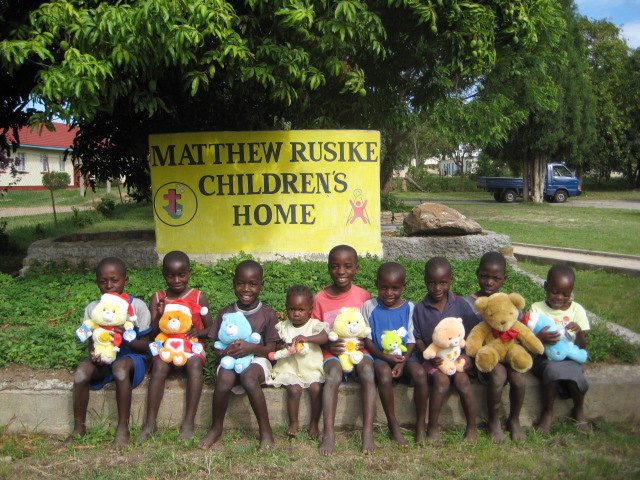
I took a suitcase of Care Bears and music cassettes ranging from Peter Pan to Lion King for the kids at Matthew Rusike Childrens Home on Monday. I bought these on Craigslist for next to nothing. They were very grateful for this donation. Mr Kupeta, who runs the home, was not available when we arrived so one of the house mothers (Mai Mashorokoto) who has been there for over 15 years took me & my mum around. She was so cheerful and full of energy and you could tell that all the kids loved her. She took us on a tour of her home and some of the other homes – she has 12 kids in a 4 bedroomed home. Her house was one of the first to be built in 2004 and furnished entirely by one local Zimbabwean business woman who refused to be named. I was deeply amazed at the generosity of this one woman, whoever she is. The furniture was good quality & very well maintained & the kids bedrooms had lots of toys. Two of the other houses were fully furnished by the British embassy.
To your left some of the kids pose with the new Care Bears I purchased on Craigslist. I also donated the casettes below with childrens music & stories.


I also learnt that the toddler in this home, one cute little boy, has been adopted by a Zimbabwean couple in diaspora. He was adopted at age 2 months but has not moved in with his parents because they are waiting for his passport! Everyone tries to make him call his house mother Gogo or Ambuya (grandmother) but all the time we were there he was calling her Mama like his house siblings do. Below is his picture. He's so adorable!
As I toured the homes I tried to get a real sense for what was needed by observing & chatting with 4 of the 12 or so house mothers. The recurring request was for food. The Catholic Commission & Methodist church, as it was explained to me, are the only regular donors of food. One house mother I interviewed said her family had not eaten meat in a month. She showed me her fridge and it was empty - she is responsible for 11 kids! I have attached the photos for you all to see. I asked her what they ate on a daily basis & she said for breakfast they’ll eat bulgur wheat which has a high nutritional value, or tea with no milk plus bread if they are lucky, but with no margarine or jam. I arrived there during lunch and the kids were eating boiled chibage (mealies/corn) with nothing else. She said this is typical for lunch. For dinner they may have sadza (like polenta or grits) & veggies with no cooking oil, onions or tomatoes. They have no access to fruits, milk, bread and other staples on a regular basis.
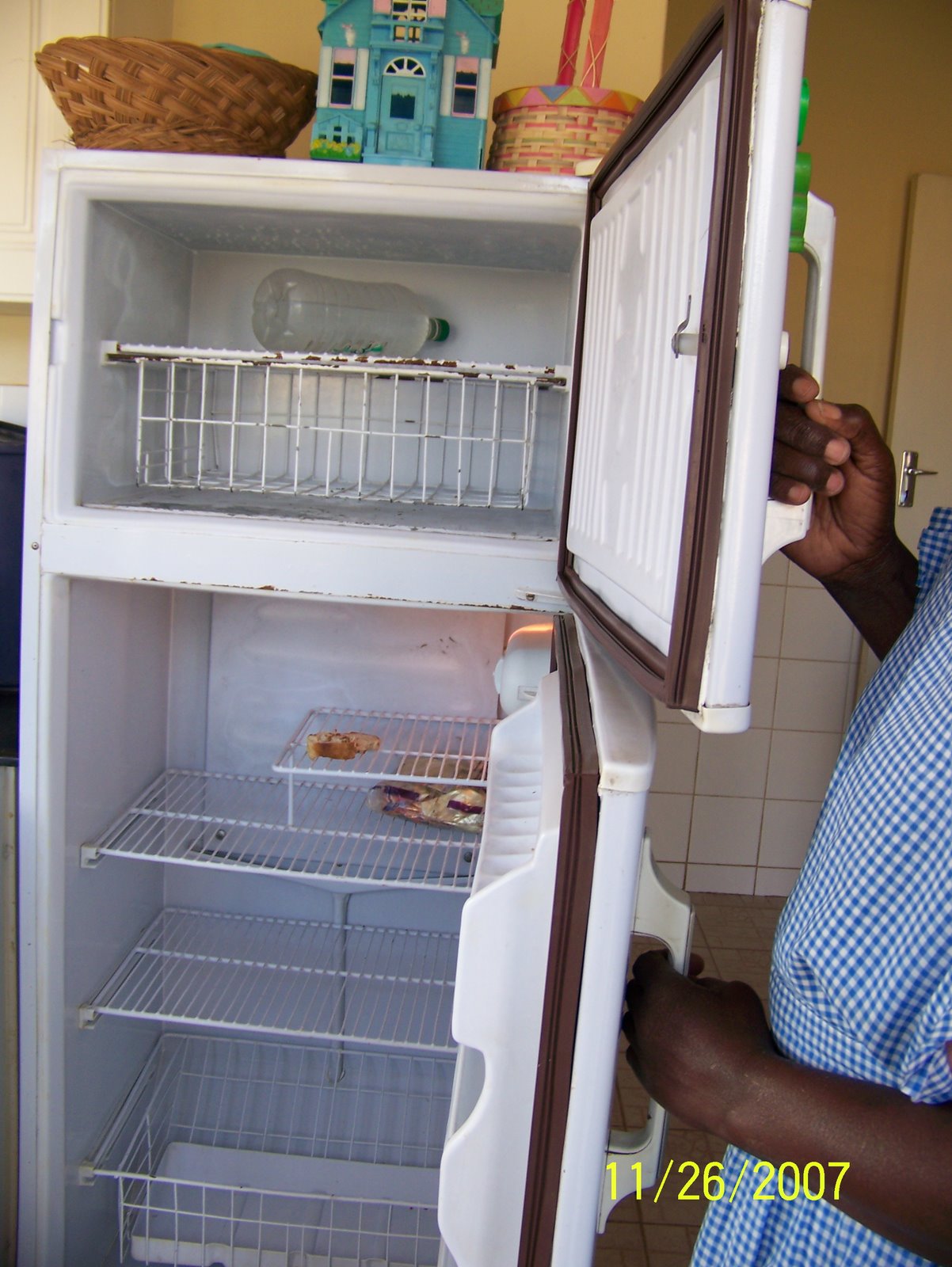


To your right is the house mother's refrigerator. I was completely shocked!


The home used to have a chicken breeding project & a piggery, but this was discontinued due to lack of stockfeed. I’m sure any skills or donations in this area would be very much appreciated.
In spite of this, everyone was very cheerful and the kids seem happy and secure in their environment. The local police station has provided them a policeman to man the gate 24hrs since the Christmas season is when thefts occur. The house mothers have been trained on herbal remedies & each household has a herb garden to treat basic illnesses like a common cold or tummy ache. There is a clinic on the premises which was previously being run by the matron but now a registered nurse has been provided by the Ministry of Health who will also be available to the surrounding Epworth community. Painkillers etc.. would be welcomed too…
Children play after lunch


There are separate dormitories designated for teenage boys and girls. They live on their own and cook for themselves under the supervision of a house mother. They are sent for basic skills training like hair dressing & carpentry, and some have gone as far as becoming doctors and lawyers. Sadly one of their lawyers was killed in a car accident recently.
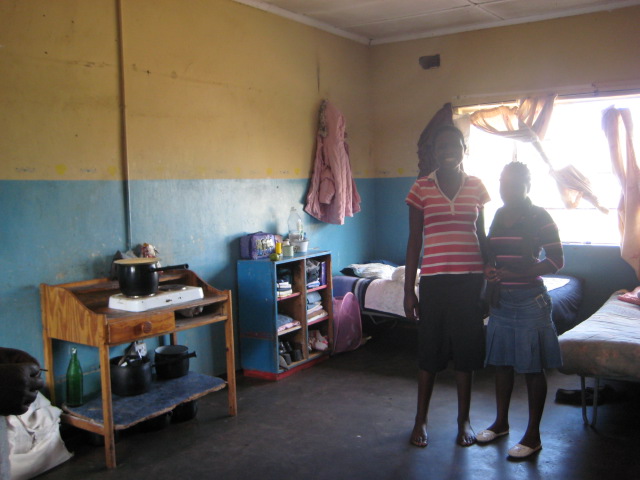
To your right is one of the girls dormitories. Here they cook for themselves (see 2 plate stove on the left side of the photograpgh) in order to prepare themselves for the outside world when they reach the age to leave the home.


There is a crèche (kindergarten/nursery school) which is open to the public as well as the children from the home. The crèche is on the premises & it has lots of swings in the playground. The playground could be spruced up a bit (paint etc..) but overall the equipment seems to be decent shape.The home continues to build new residences using donor funds. One of the main outside donors is the staff of Quantas airlines who started their relationship with the home many years ago & for which the Home is extremely grateful.


Children's creche and playground
There is a new section for teenage boys & girls but they have not yet moved in due to lack of furniture. The thing that struck me most about the home was how serene it was, how joyful the mothers & their kids were and how clean the place was. I mean ALL the kids bedrooms were amazingly neat & clean, from toddlers to the teenagers!!


I’ve tried to be as detailed as possible but if anyone has any questions please just let me know. If you want to donate money please e-mail me on http://www.tashanda.com/. The fundraising committee typically have a series of fundraising events within the Methodist church. For example a golf tournament or an annual dinner dance. Two or more committee members will go to Makro (mega grocery store) or wherever else to buy food & personally take the food rations, blankets etc.. to each house & make sure it’s in the pantry … If you prefer to send the funds directly please go to the Matthew Rusike website on http://www.domain.com/. The only problem with their website is that they accept checks in Zimbabwean currency only. Tashanda knows the fundraising committee members personally & guarantees proper delivery & accountability of funds or donations in kind.

Based on my own observations during the 2 hours I was there, the home needs the following in order of priority:
a) FOOD, FOOD, FOOD!!!
b) Furniture (ANY) for the new dormitories. Kids bedrooms look like they need new bedcovers.
c) Clothing – the home is expanding outside Harare
d) Penpals and sponsors for individual kids – one teenage girl remained asleep when we walked into the teenage girls dorm rooms. Her sisters claimed she was awake & they thought she was being rude. This girl was probably feeling depressed/sad & had no one to talk to. I felt bad for her & this is why I think mentoring through letters in general could be very effective. The house mothers or the kids take their letters to the office where they are posted free on their behalf. This small investment could have a huge impact on a kid.
e) Anyone with a skill that could benefit the home. This can range from agriculture to sewing, art, soccer, party planners, computer gurus – ANYTHING
f) Books! I saw lots of toys in the kids bedrooms but no books to help further their reading skills.
No appointment is necessary & they welcome visitors with open arms, always. The office is open during the week only but you can visit he house mothers anytime.